Layer8 Panel: AI-Powered Network Operations
 17 November 2026 · 3 min read
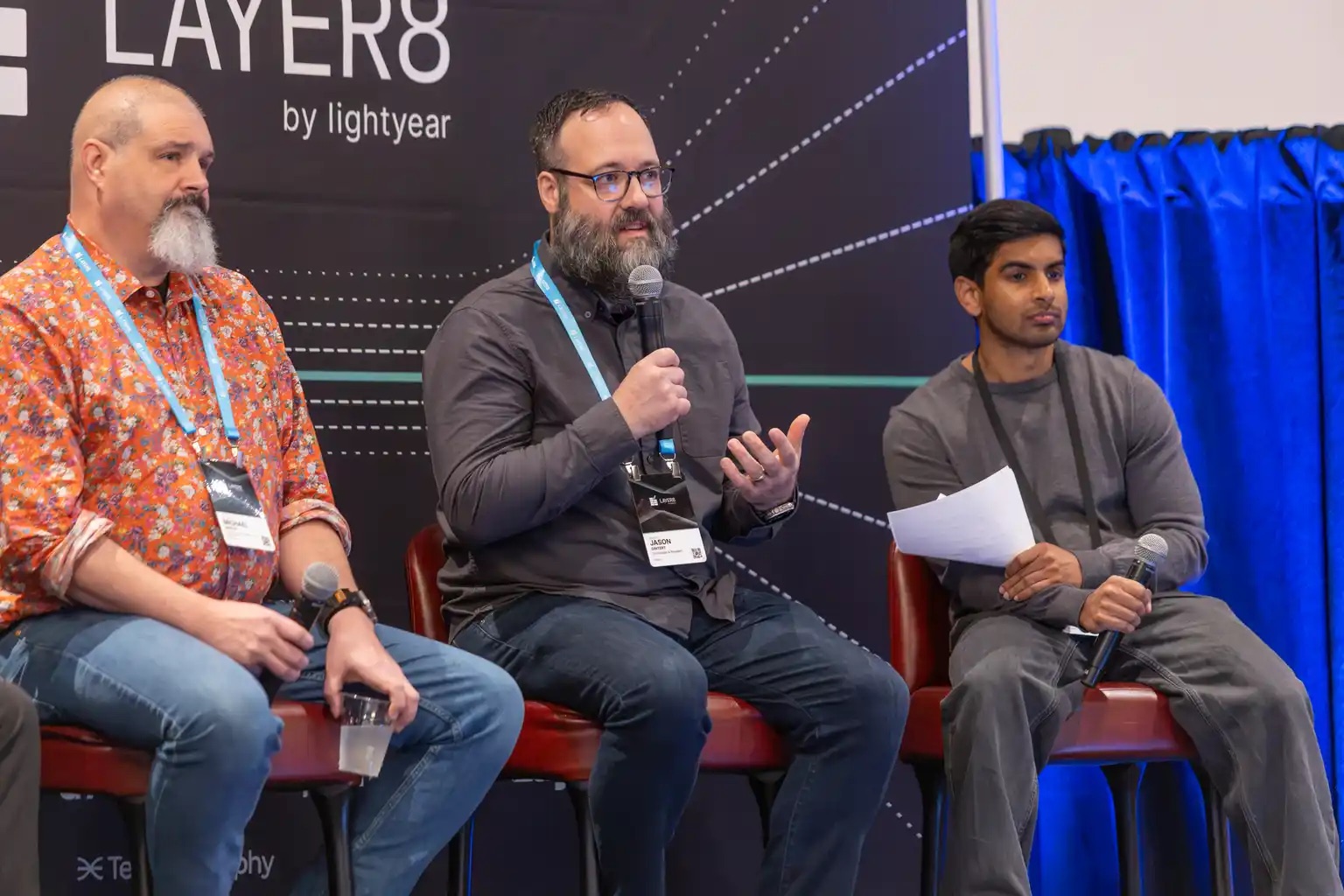
Layer8 by Lightyear, New York City. Recorded 4 November 2026, published 17 November 2026. About 40 minutes.
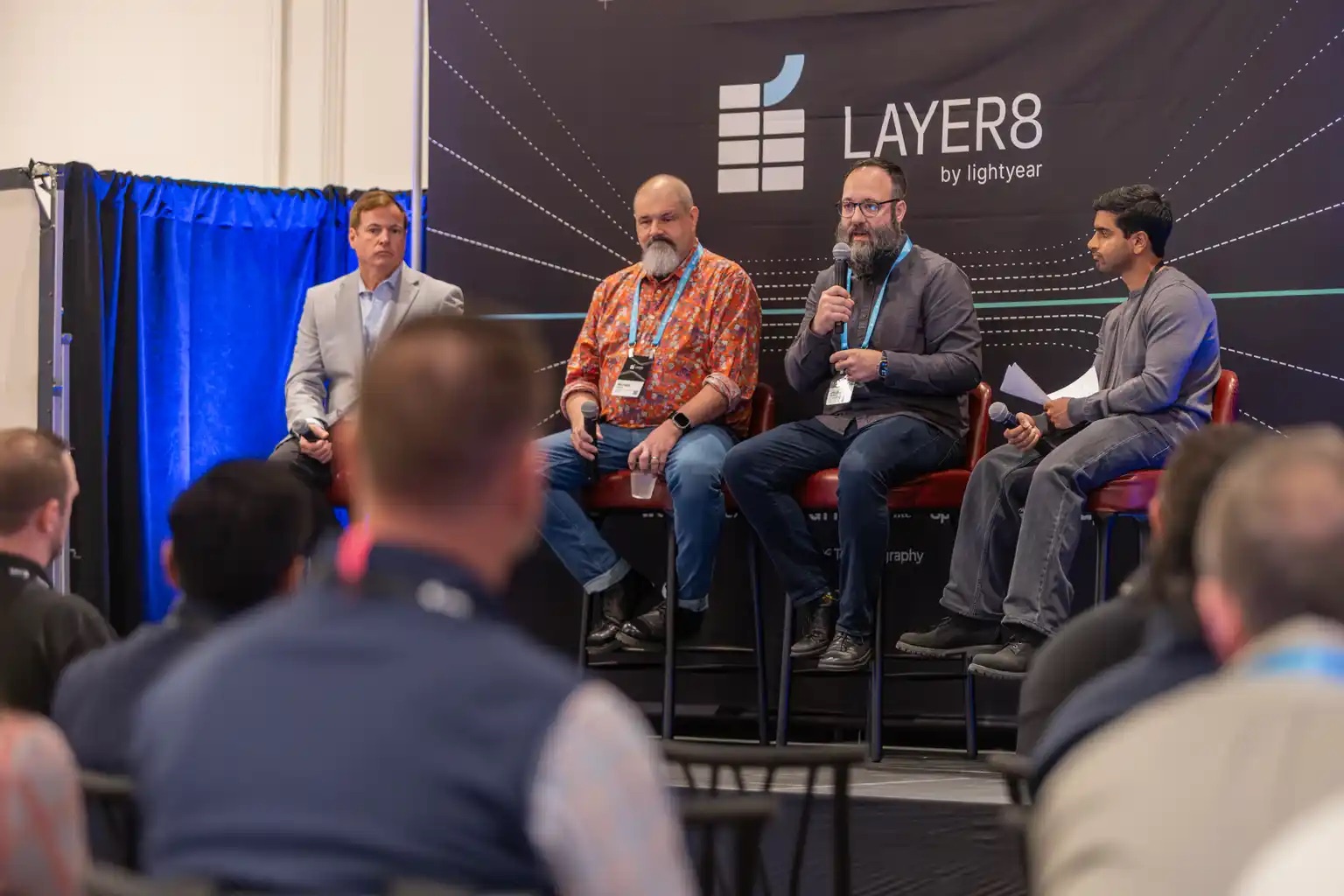
I was honored to join the Lightyear team and a great lineup of presenters in New York on 4 November for the first Layer8. For this panel Lightyear put three of us on stage to talk about agentic AI in network operations: Todd Stewart from Honeywell Aerospace, Michael Martin from CVS Health and me, wearing my USNUA hat with a little consulting mixed in. Two people running AI efforts inside large enterprises and one who gets to see a lot of them from the outside. It made for a good mix.
Where it is working
Triage and root cause analysis came up first, and that matches what I see. The old routine of an engineer firing the same commands across a pile of devices is exactly the kind of work an agent can do while everyone is asleep, so you walk in to a readout on the site that dropped overnight instead of starting from zero. Todd described Honeywell building agents that run the checks a network engineer always runs, continuously, so the answer is waiting before the users start complaining. His engineers name their agents and give them performance reviews, which I love.
Keep a layer between the model and the network
The part I pushed on is determinism. A model that does something one way eight times and a different way the other two has no business talking directly to your routers. Network automation has been around a long time and the frameworks already have the checks and balances built in. Let the AI talk to that layer, treat it like a junior engineer and widen what it is allowed to do as it earns trust. If you do not have that automation layer and a source of truth yet, start there before you let AI anywhere near a change.
Two other things I mentioned: MCP servers are shockingly easy to build for a platform that does not have one yet, and LLM and MCP gateways are worth a look. Think of a gateway as a firewall for your AI calls. One place to apply policy, keep track of what is being called and route each request to the cheapest model that can handle it.
Measuring the return
Someone in the audience asked about ROI. My answer is to start with time. Figure out how long a workflow takes a person today and how long it takes once AI is doing the work, and put a gateway in front of any paid models so you can watch the spend as it grows. Michael made the bigger point that the value is often in scope rather than transactions. On one project he got the answers in a week after a team had spent seven months on the problem. The bottleneck became getting the changes in.
Thank you
Thank you to the Lightyear team for the invitation and for pulling the first Layer8 together, to Denis Thankachan for keeping the conversation moving and to Todd and Michael for a candid conversation. Getting a seat on a stage next to people doing this work at that scale is a privilege I do not take for granted.
Stay for the audience Q&A, including Todd's story about an engineer who built an AI bot to plan date nights with his wife. Todd's logic: if you can survive that, you can build agents for the network.