Applied AI for Networking
 12 September 2025 · 3 min read

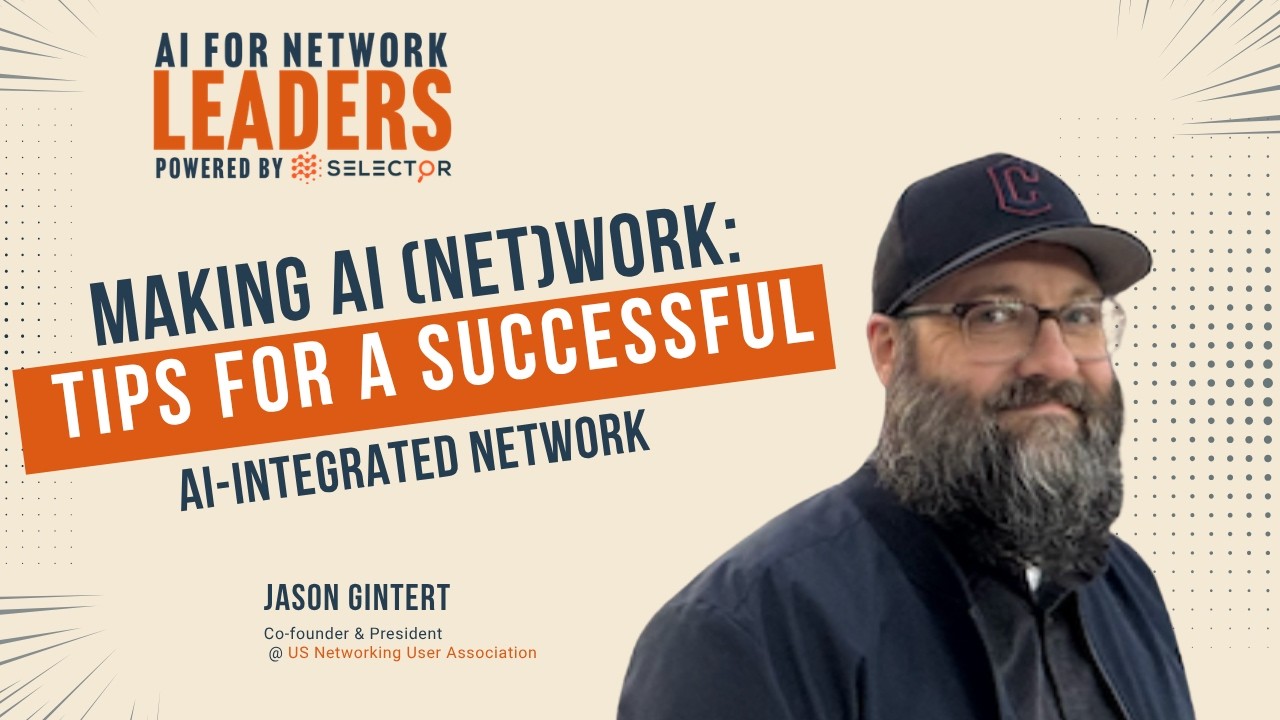
Mike Trappe and I had a great conversation on the Network Buzz, a Laketec Podcast. We took a fast, plain-English tour of AI for networking. I traced my path from dial-up support to CTO at Laketec, then dove into how gen-AI and LLMs (ChatGPT, Claude, Gemini, Llama/GPT-OSS) can practically boost network operations. We contrast hype vs. reality (hallucinations, validation, prompting), and spotlight domain tools like Juniper Mist and Aruba Central with natural-language queries. I previewed Laketec’s internal work using Model Context Protocol (MCP) to let an LLM talk to APIs (Auvik, Aruba Central) for read-only, conversational insight.
Getting past the eye roll
Generative AI is heading toward Gartner's trough of disillusionment, partly because of AI washing and partly because people try it once, get burned, and leave. The burn is usually a hallucination: the model confidently returns something that is not real, sometimes blatantly, sometimes off by just enough to hurt. The lawyers who filed briefs citing cases that did not exist are the canonical example. So rule one is validate the output, and a lot of acceptable-use policies now put that responsibility squarely on the employee. Rule two is learn to prompt: give the model a role, then be as specific as you possibly can. Specificity is what turns a vague answer into a useful one.
The landscape in one pass
We walked through the foundation models, OpenAI, Anthropic, Google, Meta's Llama and the newly released open-weight gpt-oss, and why a handful of labs have pulled away: the parameters and the raw compute needed to bake the cake, which is my term for training a model over months. Most organizations will never do that; they build on top through APIs. Tools like OpenRouter let you route requests across several models, and the coding IDEs like Cursor and Windsurf let you pick per task. I use more than one every day. Claude for code and writing, ChatGPT for the general stuff I used to ask Google.
For networking specifically, the domain knowledge shows up first in the commercial products. Juniper Mist was the earliest AIOps environment I saw where you could ask the infrastructure, in plain English, where a MAC address lives or which VLANs are at this office. Aruba Central has grown the same capabilities, and AI-native newcomers like Nile and Meter are building from the ground up.
What we were building
Our platforms expose APIs, but reading data out of an API means writing code, and most people would rather ask a question. That is the gap the Model Context Protocol fills. An MCP server is a translator: it speaks the model's language on one side and makes API or database calls on the other. We had built one to sit between an LLM, our Auvik monitoring and Aruba Central, so an engineer could ask which access points are down at a customer site, compare the inventories, or just ask whether anything anomalous happened there in the last seven days. Read-only for now, on purpose. Write capabilities can come later, and slowly.
Advice for the AI-averse
Start with the platforms you already own and see what they have built in. Try the assistant you keep dismissing; it has probably improved since you last touched it. Microsoft Copilot was noticeably better in a matter of months. If the answer is bad, the prompt might be the problem, and you can literally ask the model what question you should be asking. Before any large AI project, get your data in order, because messy data is why most of them stall. And do not be afraid of open source: with Ollama or LM Studio you can pull a small Llama model, unplug your laptop from the internet and be chatting with a fully private local model in minutes. Maybe do not start with DeepSeek.
I said on the show that I think this is the biggest technological shift since the dawn of the internet, and possibly bigger. The people who learn to wield it will have a real advantage over the people waiting for it to take their jobs. Dip a toe in.
I had an awesome time, thanks Mike!
Check it out below.
PS - I also put together a post on this at the Laketec site here: https://www.laketec.com/2025/09/16/applying-ai-to-networking/